
Contents
The AI Tools Hidden Costs Companies Don’t See Coming
What’s Happening?
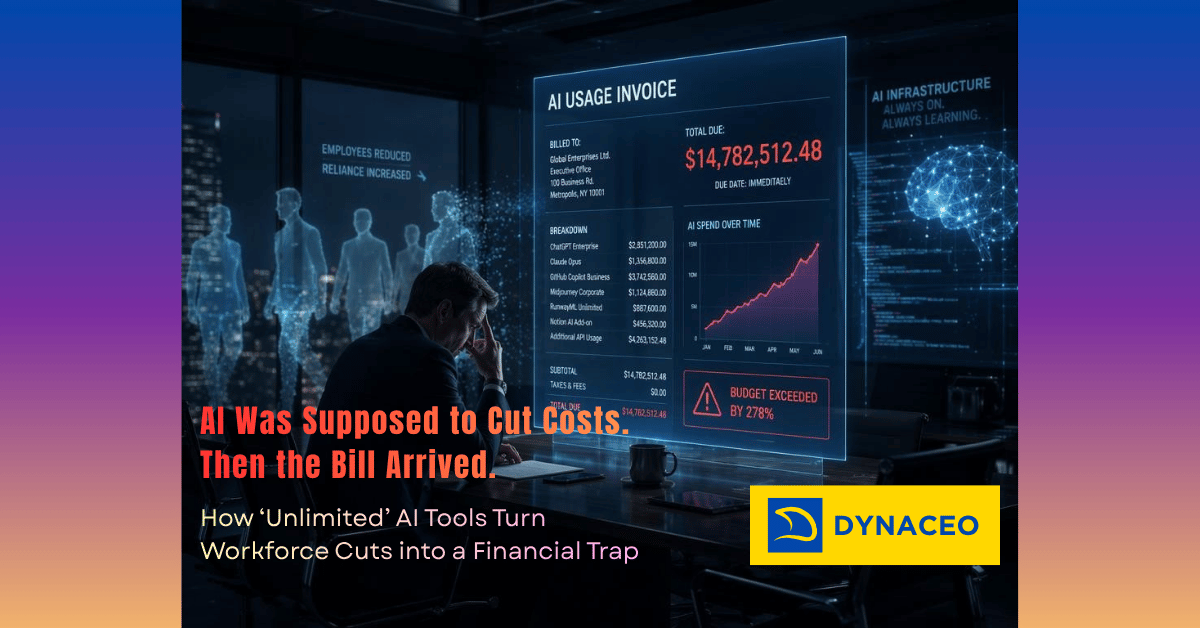
Picture this: A CEO walks into the office thinking he’s been clever. He’s laid off hundreds of employees to cut costs, replacing them with shiny AI tools that promised to do the same work for a fraction of the price. Then the monthly bill arrives – $3 million for AI services alone. The savings he thought he’d made have vanished, and he’s more trapped than ever.
This scenario is becoming reality for companies across the world as they discover the hidden costs of AI dependency.
The Illusion of “Unlimited”
When companies first sign up for AI tools like Cursor, OpenAI, or other popular services, they’re told they’re getting “unlimited” access. It sounds perfect – pay a monthly fee and use as much as you want. But here’s the catch: unlimited doesn’t actually mean unlimited.
These services start slowing down or throttling your usage once you hit certain thresholds. Suddenly, the AI that was supposed to replace your entire customer service team is crawling at a snail’s pace, answering one question every few minutes instead of handling hundreds. To get back to normal speed, you need to buy more credits, upgrade your plan, or pay usage fees that weren’t clearly explained upfront.
The pricing structures are deliberately confusing. Companies don’t provide simple calculators that let you estimate your monthly costs based on your actual usage needs. Instead, they use vague terms like “tokens,” “API calls,” or “compute units” that mean nothing to most business leaders trying to budget.
The Dependency Trap
Here’s where the real problem begins. Once companies lay off their human workers and become dependent on AI tools for critical business operations, they lose their negotiating power. They can’t simply stop using the AI services because there’s no human workforce to fall back on.
AI companies understand this dynamic perfectly. They know that once a business has restructured around their tools, that business becomes a captive customer. This is when the price increases begin. What started as a cost-saving measure becomes a expensive dependency that’s impossible to escape.
It’s like firing your entire maintenance team and then discovering that your building management company has tripled their rates. You can’t negotiate because you no longer have the internal capability to handle the work yourself.
The Coming Price Storm
Right now, many AI services are artificially cheap because venture capital investors are subsidizing the costs. These startups are focused on gaining market share rather than making immediate profits. They’re essentially selling their services at a loss to hook as many customers as possible.
But this won’t last forever. As these companies mature and investors demand returns, prices will inevitably rise. The businesses that have already laid off workers and restructured around AI tools will have no choice but to pay whatever prices are demanded.
Think of it like the early days of ride-sharing apps, when rides were incredibly cheap because companies were burning through investor money to gain customers. Once they dominated the market and people stopped using taxis, prices went up significantly.
The Real Cost of AI Transformation
The meme captures this perfectly – executives discovering that their brilliant cost-cutting strategy has backfired spectacularly. What they thought would save them money has instead created a new category of massive, unavoidable expenses.
The tragedy is that many companies are walking into this trap with their eyes closed. They see the initial low costs and make irreversible decisions about their workforce, not realizing they’re trading one type of expense for another – and giving up their ability to control costs in the process.
As AI adoption accelerates, more companies will find themselves in this position: dependent on expensive AI services, unable to return to human-powered operations, and facing monthly bills that dwarf their original payroll costs. The AI revolution isn’t just changing how work gets done – it’s creating an entirely new form of corporate dependency.